End-to-End Roadway Solutions
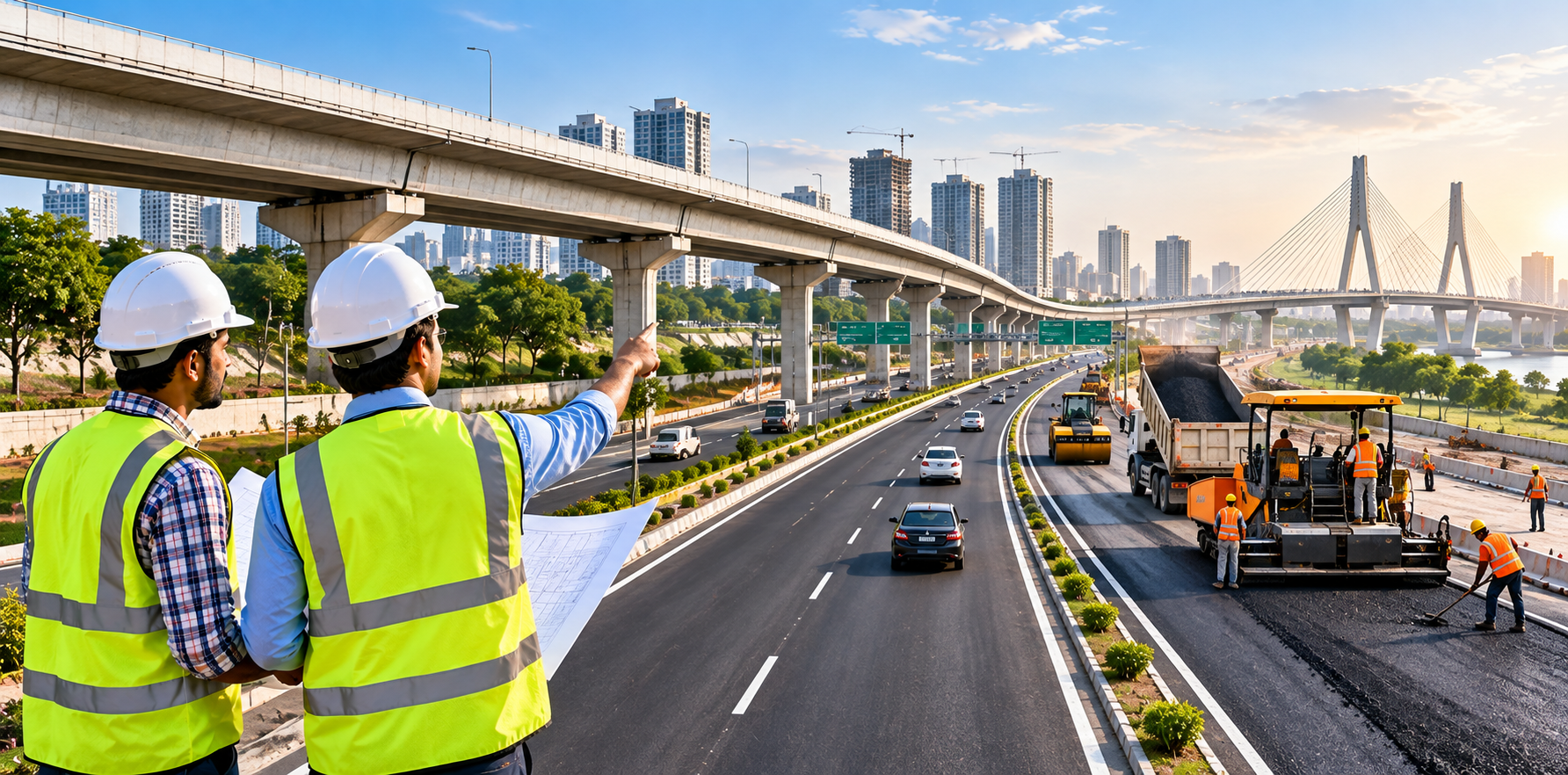
We provide comprehensive support across the roadway project lifecycle, helping clients manage infrastructure from planning and construction through commissioning, operation, repair and long-term maintenance.
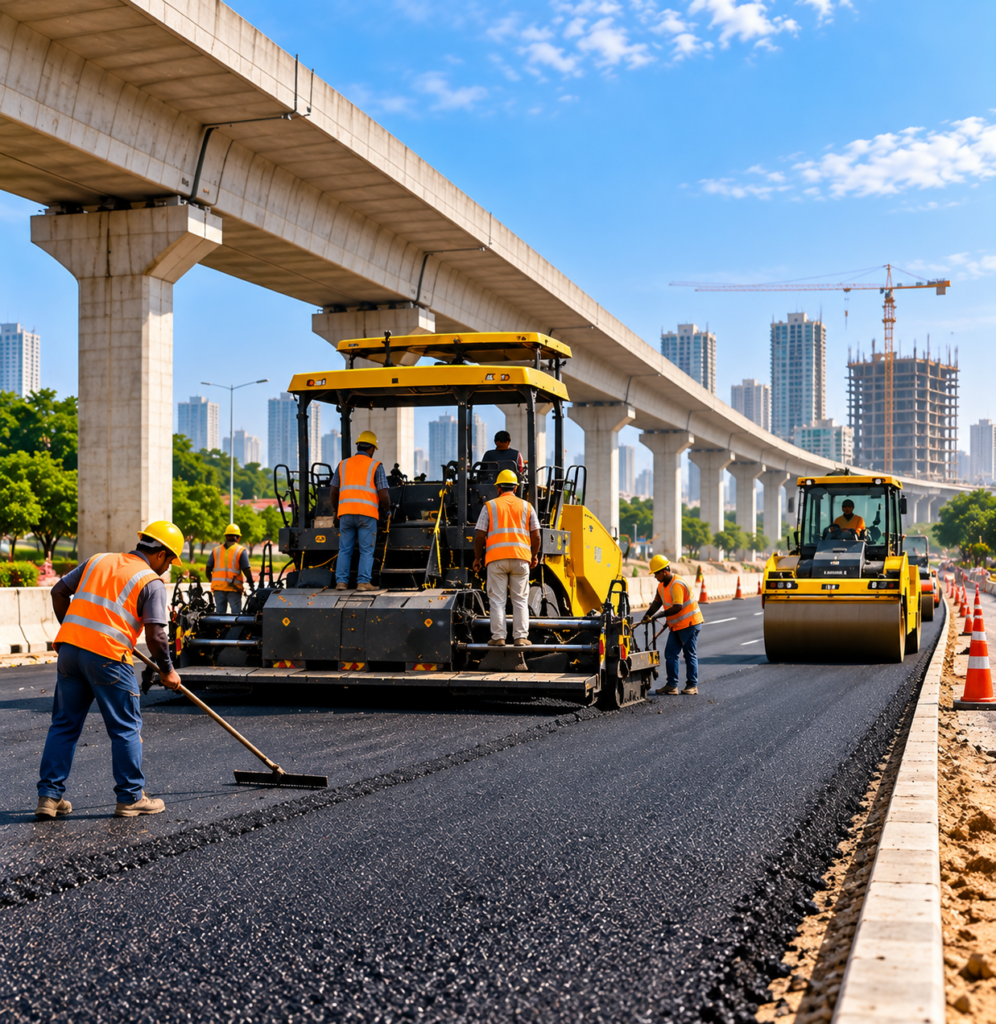
Our approach can encompass project planning, site preparation, earthwork, road formation, drainage infrastructure, pavement development, associated civil works, landscaping and post-construction maintenance.
By coordinating different stages through an integrated project-management framework, we seek to improve quality control, resource utilisation, execution efficiency and lifecycle performance.
Our capabilities can include:
Infrastructure with Ecological Responsibility
Roads inevitably interact with the natural environment. Their construction and operation can influence vegetation, soil, drainage patterns, noise levels, air quality and surrounding habitats.
We therefore integrate environmental considerations into infrastructure planning wherever technically and operationally feasible.
Green Belts & Roadside Ecology
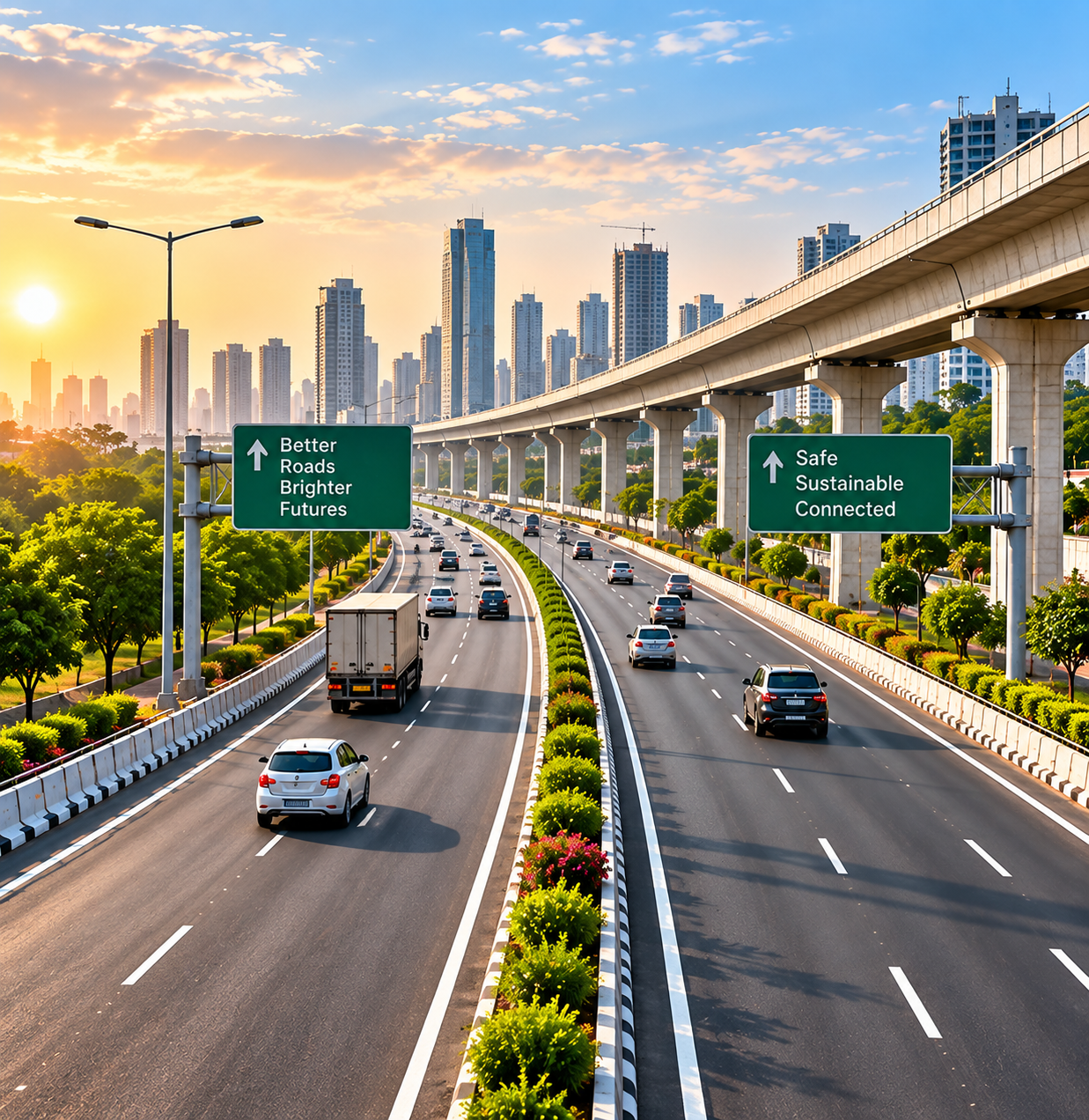
Strategically planned green belts, avenue plantations, median landscaping and roadside vegetation can transform otherwise hard infrastructure into more visually integrated and environmentally responsive corridors.
Plant selection can be planned according to local climatic conditions, soil characteristics, water availability, maintenance requirements and the functional needs of the site.
Appropriately designed vegetation can contribute to:
- Landscape improvement
- Dust interception
- Shade creation
- Soil stabilisation
- Visual screening
- Microclimate improvement
- Habitat support
- Improved roadside aesthetics
The emphasis is on functional greenery rather than decorative plantation alone—creating landscape systems that complement infrastructure while remaining practical to maintain.
Noise-Reduction & Environmental Barriers
Transportation corridors can generate significant noise, particularly in densely populated or environmentally sensitive areas.
Where appropriate, infrastructure planning can incorporate vegetative buffers, landscaped barriers, acoustic treatments and other noise-management measures suited to the site.
The objective is to create a more compatible relationship between transportation infrastructure and surrounding residential, institutional, commercial or ecological environments.
Sustainable Transit Infrastructure
The future of infrastructure lies in achieving a practical balance between mobility, durability, affordability and environmental responsibility.
We encourage the adoption of sustainable construction principles wherever they are technically appropriate and commercially viable.
This may include:
- Responsible sourcing of construction materials
- Greater utilisation of locally available resources
- Optimised transportation of materials
- Reduction of construction waste
- Recycling and reuse wherever technically suitable
- Efficient water management
- Energy-conscious project practices
- Environmentally responsible site management
- Sustainable roadside landscaping
- Lifecycle-oriented maintenance planning
Local sourcing, where appropriate, can also support regional suppliers and reduce unnecessary material transportation, thereby contributing to more efficient project logistics.
Drainage & Climate Resilience
A durable road is dependent not only on pavement quality but also on effective water management.
Poor drainage can accelerate pavement deterioration, erosion, settlement and structural damage. Our infrastructure approach therefore recognises drainage as a critical component of roadway performance.
Site-specific solutions may include roadside drains, culverts, storm-water management systems, erosion-control measures and appropriate landscape interventions.
With increasingly variable weather conditions, infrastructure planning must also consider resilience against heavy rainfall, waterlogging, erosion and other climate-related stresses.
Safety, Quality & Operational Performance
Infrastructure has value only when it performs reliably and safely.
Our project approach emphasises systematic quality control, appropriate construction practices, site supervision and maintenance planning. Safety considerations can be incorporated across the project lifecycle—from construction-site management to the operational characteristics of completed infrastructure.
We seek to build infrastructure that is:
Safe. Durable. Maintainable. Efficient. Environmentally Responsible.
From Construction to Long-Term Asset Management
The completion of a road project should not mark the end of infrastructure management. It should represent the beginning of its operational lifecycle.
Regular inspection, preventive maintenance, timely repairs and systematic asset monitoring can help extend infrastructure life and reduce the risk of expensive deterioration.
Our lifecycle philosophy therefore connects:
Planning → Design Coordination → Construction → Environmental Integration → Commissioning → Inspection → Preventive Maintenance → Rehabilitation
This integrated perspective enables infrastructure owners and stakeholders to look beyond immediate construction costs and consider long-term performance, maintenance requirements and total lifecycle value.
Building Corridors for People, Economy & Environment
Well-planned roadways are economic and social enablers. They connect villages and cities, facilitate movement of goods and people, improve access to markets and services, and support the growth of commercial and industrial activity.
At the same time, infrastructure must coexist responsibly with the communities and ecosystems through which it passes.
Our vision is therefore to contribute to a new generation of roadway infrastructure—where engineering efficiency and environmental stewardship work together.
Our Commitment
We don’t simply build roads.
We help create connected, resilient and responsibly managed infrastructure corridors designed for long-term performance.
From construction and rehabilitation to ecological integration and maintenance, Budge Budge Green Apple Industries brings together infrastructure management, environmental sensitivity and operational thinking to help build transportation systems prepared for the needs of today—and the demands of tomorrow.